


Welcome to Inslogic Lab Notes Vol. 3. In the world of industrial 3D printing, Nylon (Polyamide) is the gold standard for functional, high-stress parts. However, a common mistake is treating all nylon filaments as identical.
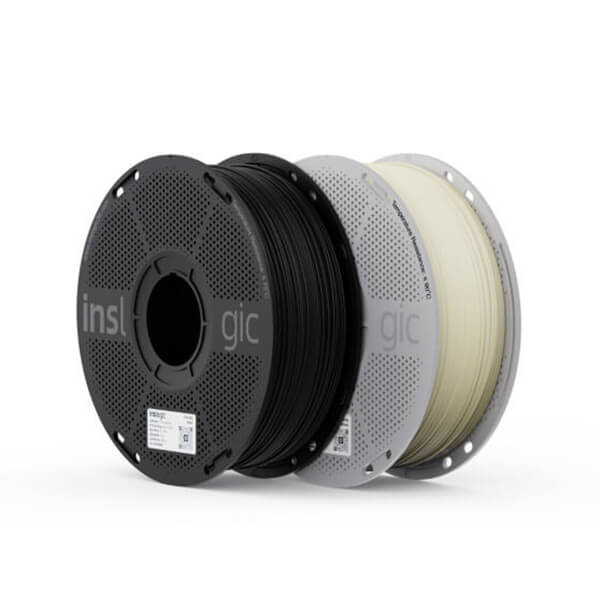
They may all share a nylon base, but they are molecularly engineered for vastly different environments. To eliminate the guesswork from your material selection, our R&D lab put three of our flagship materials to the test: Nylon PA6/66, PA6-CF (Carbon Fiber Reinforced), and PA6-GF (Glass Fiber Reinforced).
The Benchmarking Data: Head-to-Head Test
Our engineering team measured these filaments across three critical performance metrics: Heat Deflection Temperature, Flexural Strength (stiffness), and Tensile Strength (pulling resistance). Here is the raw technical breakdown:
| Material Spectrum | Heat Resistance | Flexural Strength | Tensile Strength |
|---|---|---|---|
| Nylon PA6/66 | 123°C | 103 MPa | 79 MPa |
| PA6-CF (Carbon Fiber) | 209°C | 254 MPa (Winner) | 172 MPa (Winner) |
| PA6-GF (Glass Fiber) | 210°C (Winner) | 190 MPa | 125 MPa |
1. Nylon PA6/66: Unmatched Printability & Balanced Toughness
If your project requires standard industrial strength without the complexity of fiber-reinforced printing, PA6/66 is your baseline. It balances a 103 MPa flexural strength with exceptional chemical and oil resistance.
Key Advantage: Extreme printability. Unlike composite nylons, it requires no heated enclosure, prints at lower temperatures, and offers high interlayer bonding toughness.
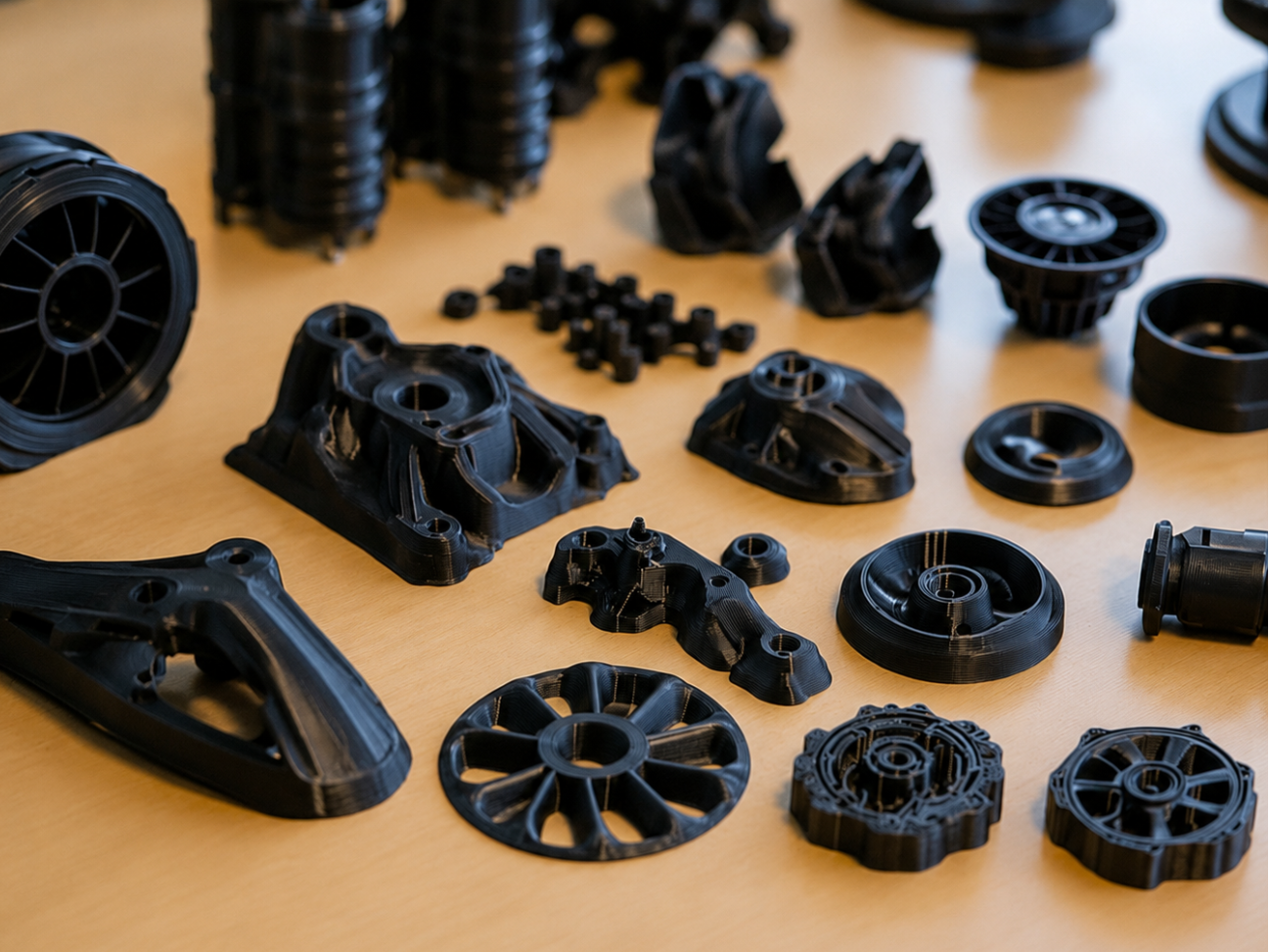
Best Applications: Functional prototyping, custom jigs and fixtures, automotive components exposed to fuels/lubricants.
2. PA6-CF: Maximum Stiffness, Structural Dominance
Infused with 20% high-modulus carbon fiber particles, PA6-CF is designed for parts that absolutely cannot bend under load. With a staggering flexural strength of 254 MPa and a tensile strength of 172 MPa, it stands as the strongest material in this lineup.
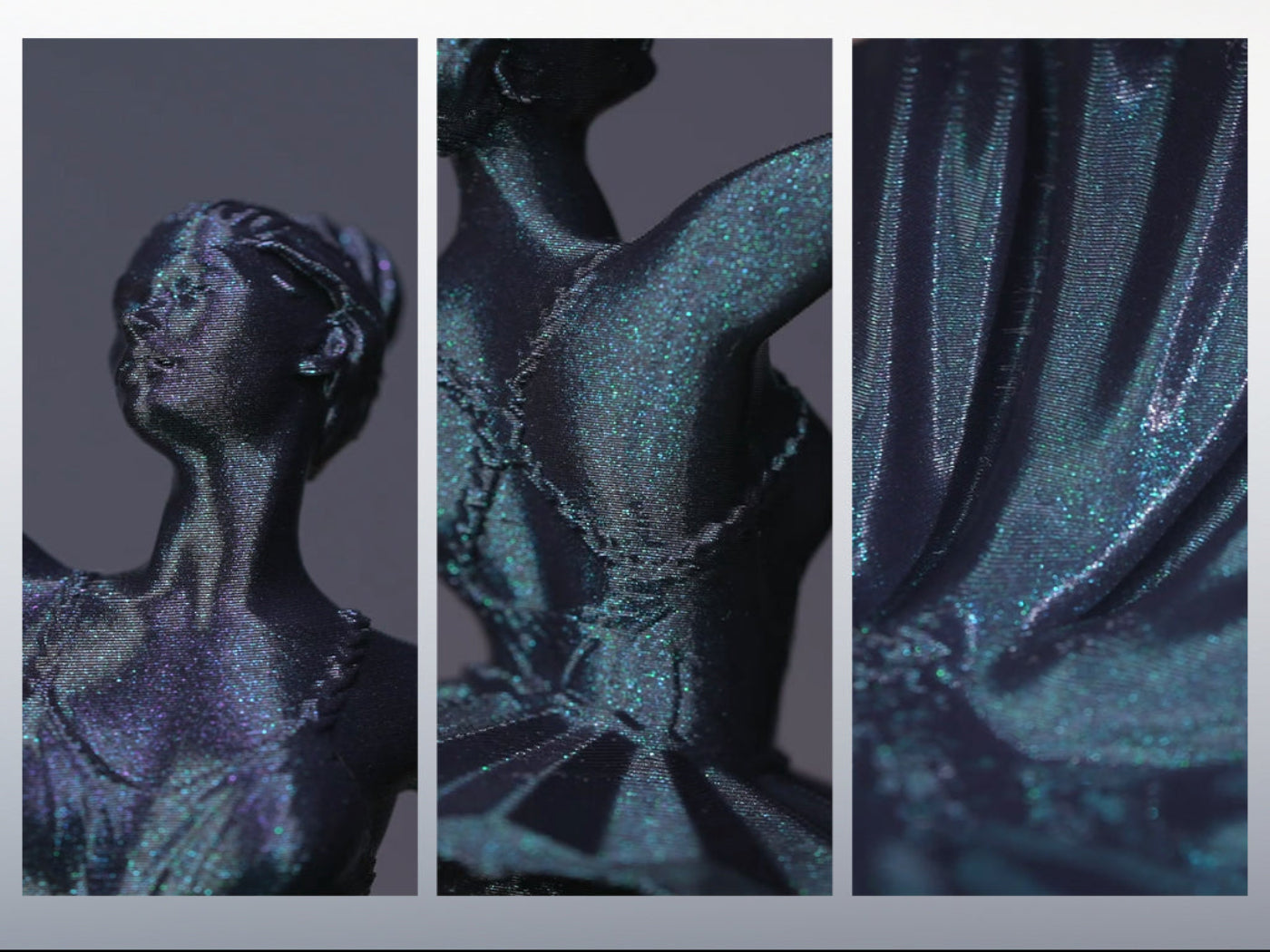
Key Advantage: Peak tensile and flexural performance coupled with a premium, sleek matte finish that completely hides layer lines. It is stable up to 209°C.
Best Applications: Aerospace brackets, high-load structural components, drones, automotive exterior racing parts.
3. PA6-GF: The High-Temperature Thermally Stable Powerhouse
When your prints face constant friction and scorching thermal environments, glass fiber is the logical answers. Reinforced with 25% glass fiber, PA6-GF achieved the highest thermal resistance in our lab testing, maintaining structural integrity up to 210°C.
Key Advantage: Exceptional impact toughness combined with extreme thermal thresholds. It is highly optimized for post-processing and requires no post-print annealing to achieve its maximum thermal properties.
Best Applications: Under-the-hood automotive tooling, heavy machinery components, manufacturing molds, high-heat electronic housings.
Equip Your Workbench for Industrial Success
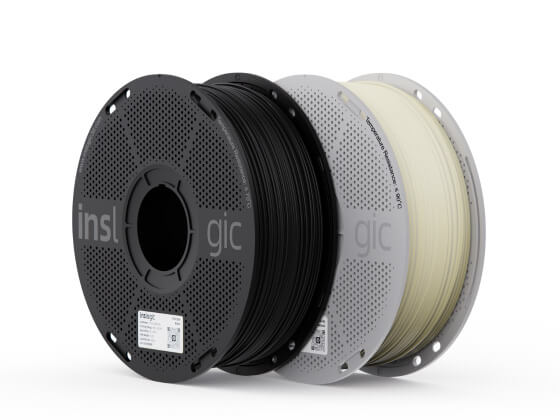
Understanding the data allows you to choose materials with predictability and confidence. Match your engineering requirements to the correct Inslogic Polyamide ecosystem to guarantee structural success on your next manufacturing run.
Explore the High-Performance Inslogic PA Series Engineering Filaments.
🔥 Inslogic Rewards Season: Test Our Lab Data Yourself
Don't just take our R&D testing's word for it. From July 2nd to July 31st, we are running our massive annual Rewards Season, giving away over 3,000+ engineering samples and sitewide rewards to our making community.
Whether you want to stress-test our high-stiffness PA6-CF or try the thermal limits of PA6-GF on your own workbench, now is the perfect time to claim your benchmark sample.