



Welcome to Inslogic Lab Notes Vol. 4. Even with high-grade filaments, default slicer profiles can occasionally hit a wall when dealing with steep overhangs or organic composite materials.
In this volume, we isolate two practical printing challenges: achieving clean, flat bridging without support structures, and eliminating the bottom-layer tearing common with Woodfill PLA.
Part 1: Eliminating Saggy Bridges & Overhangs
Bridging requires a delicate balance between extrusion mass and cooling speed. When filament spans open air, too much speed or incorrect flow will cause the molten line to droop before it solidifies.
As demonstrated using our Inslogic Matte PLA, achieving a completely flat bridge comes down to adjusting two essential slicer parameters:
- Adjust Bridge Flow (1.5 – 1.8): Increasing the bridge flow ratio maintains ideal line width and tensile strength, giving the extruded line enough body to hold its form across gaps.
- Reduce Bridge Speed (to 10 mm/s): Slowing down the toolhead gives your print cooling fans sufficient time to freeze the filament mid-air before gravity pulls it downward.
Part 2: 4 Steps to Flawless Woodfill PLA Removal
Woodfill PLA offers an unmistakable organic texture and wood-like aesthetic. However, because real organic fibers are mixed into the polymer matrix, the material is naturally more hygroscopic and slightly more brittle during bed removal.
If your Woodfill prints frequently tear at the bottom layer upon removal, follow this 4-step lab protocol to guarantee structural integrity:
- Dehydrate the Filament: Wood fibers absorb ambient moisture quickly, leading to weak layer adhesion. Dry your spool at 50°C for 4 hours before printing.
- Increase Sparse Infill Density (to 25%): A higher infill density provides robust internal scaffolding, reinforcing the bottom skin against shear stress during removal.
- Lower Initial Layer Speed (to 30 mm/s): A slower first layer creates a dense, uniform foundation and eliminates microscopic weak spots.
- Practice Thermal Patience: Never pry a warm Woodfill print off the build plate. Allow the plate to cool completely to room temperature; as the bed contracts, the part will harden and release naturally.
Master Your Print Setup
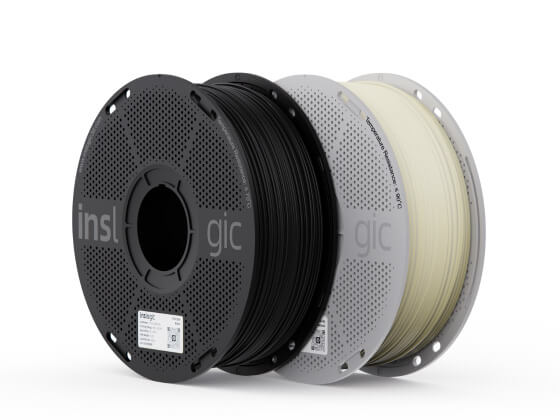
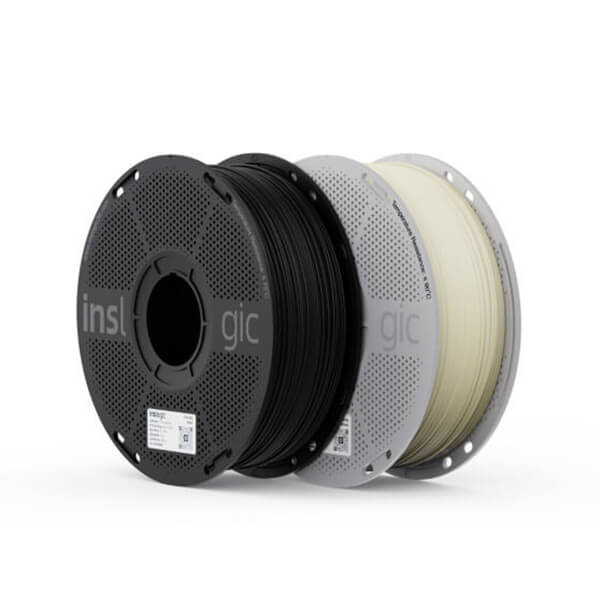
Understanding how software parameters interact with physical material properties is key to reliable manufacturing. Put these lab tweaks to work on your next project with our Inslogic Premium Filament Series.